


Winter time: an extra hour doesn't automatically mean more rest
The clocks go back this weekend. It’s a great moment to reflect on the transition that happens every single evening: moving from a full day to a body that is ready to rest.
On Sunday night, October 25th, the clocks will turn back from 3:00 AM to 2:00 AM. We get an extra hour. On paper, that sounds like a little gift for our sleep. Source: Government of the Netherlands
But anyone who has ever lain in bed tired with a head full of thoughts knows how little an extra hour sometimes changes.
You have time to sleep. You want to sleep. Yet your mind starts another lap.
That conversation this afternoon. That appointment on Monday. Something you still should have done.
It is easy to turn back a clock. For yourself, slowing down usually takes a bit more time.
You are in bed, but the day is still going on
A busy mind and a tense body can reinforce each other. You think about tomorrow, notice tension in your shoulders, and then wonder why you are still awake.
Meanwhile, sleeping becomes a chore. You look at the clock, calculate how many hours are left, and try harder to relax.
That is an exhausting way to start the night.
A calm evening ritual can help make the transition less abrupt. It gives you a moment where nothing needs to be solved or prepared. Relaxation before bedtime is also part of the sleep advice from the NHLBI.
Your breath can be a simple way to find that space.
A few minutes where you don't have to finish anything
You don't have to wait until you are under the covers. Start, for example, when you turn off the last lights or put your phone away.
Sit comfortably. Let your hands rest and notice how you are breathing at that moment.
Perhaps quickly. Perhaps a bit high in your chest. Perhaps already quite calmly.
Then, try to let your breath move gently. Inhale without forcing it and let the exhale follow naturally. A breathing exercise should remain comfortable; the NHS actually advises against forcing your breath.
Thoughts will likely keep popping up. You can always return to something simple: the movement of your breath, your hands, or the feeling of the chair beneath you.
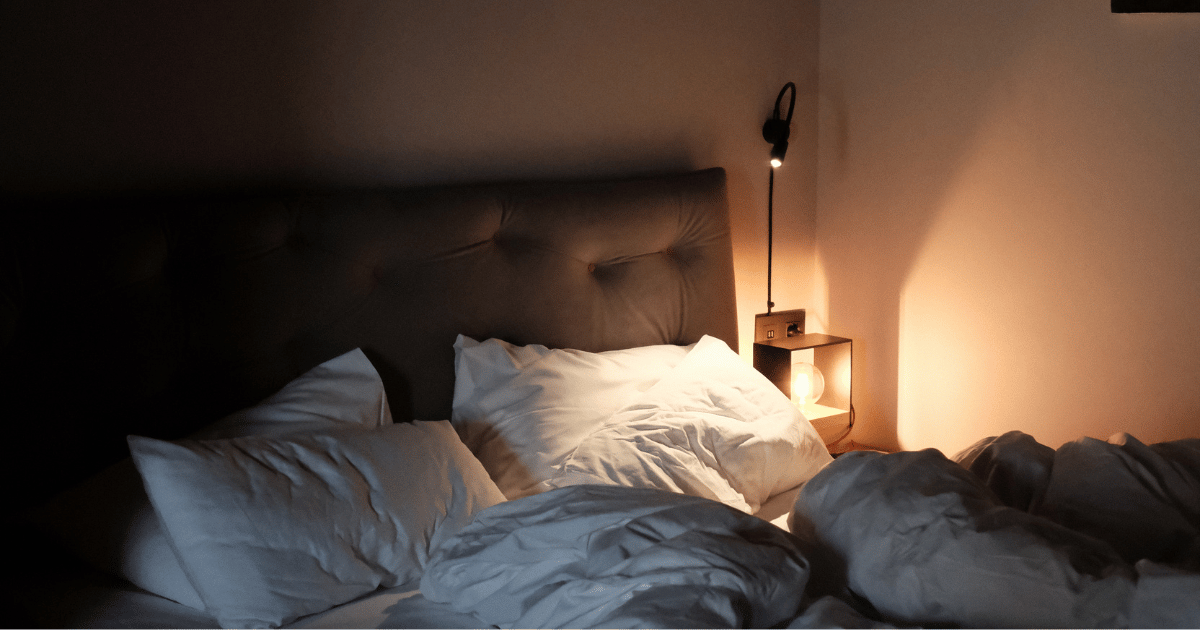
What about the 4-7-8 breathing technique?
A well-known pattern for a moment of calm is 4-7-8: inhale for four counts, hold for seven, and exhale for eight.
The steady rhythm gives your attention something to follow. You don't have to think about every single breath.
If you want to try it, practice during a quiet moment during the day first. Breathe in gently, hold only for as long as it feels relaxed, and let the air out gradually.
Does the pause feel too long, or do you find yourself gasping for air? Skip the hold and choose a simpler, more comfortable rhythm. Stop the exercise if you feel dizzy or unwell.
There is no need for a perfect round. You are simply exploring which rhythm feels right for you at the end of your day.
When counting becomes a chore
In for four. Hold for seven. Out for eight.
For some, that’s a helpful anchor. For others, it’s exactly the kind of mental math their brain has had enough of by the end of the day.
That’s where Glimp comes in. With Pebbles, your breathing rhythm takes on a tangible form that you can follow with your hands. Your attention can stay focused on that movement, while the counting fades into the background.
Before bed, you can sync your 4-7-8 training to your Pebbles via the Glimp app. Then, you can start the session offline. Your phone can be put away before you even begin your exercise.
This creates space for a simple evening ritual: dim the lights, pick up your Pebbles, and follow the rhythm for a few minutes.
A small moment that fits your day.

Give the rest of your evening some space, too
Breathing is just one part of how you wind down for the night. A dark, quiet bedroom and consistent sleep and wake times remain important. Drinking caffeine late in the evening or spending a long time in front of a screen can also make it harder to fall asleep. The NHS describes these habits as practical starting points for addressing sleep issues.
So, feel free to use the extra hour this weekend for something simple. A book. A quiet evening without a packed schedule. Or take the time to get to know a breathing rhythm that you can follow later in the evening.
Do sleep problems persist and are you noticing the effects during the day? Discuss them with your GP. For chronic insomnia, cognitive behavioral therapy for insomnia, or CBT-I, is generally the first recommended treatment. Source: NHLBI
The clocks go back automatically this weekend. You can shape a peaceful end to your day every single evening.
Discover how Glimp Pebbles fit into your evening ritual


